
Author Archives: Ola Oladipo
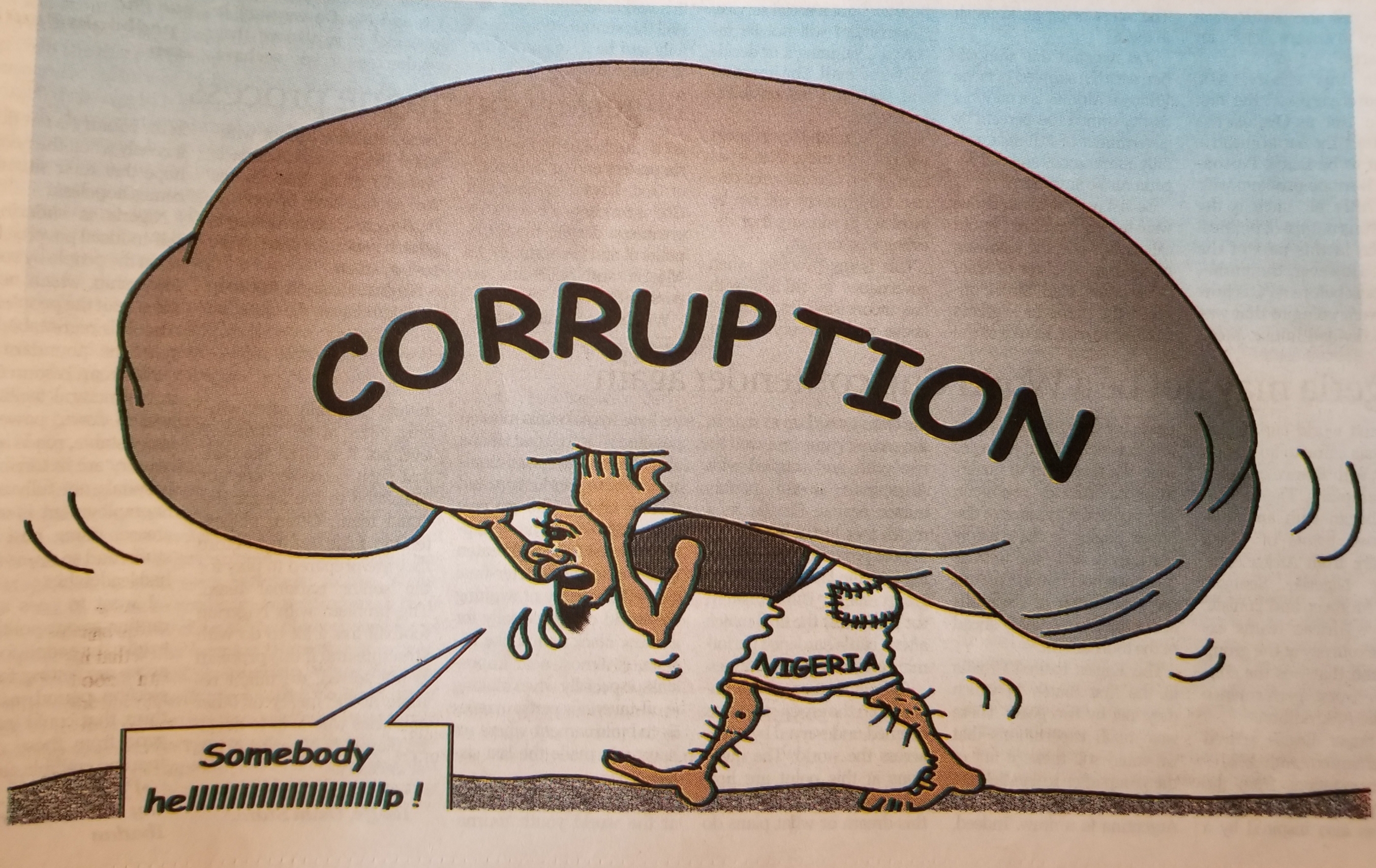
Adeeko Olusegun – Democracy in Nigeria
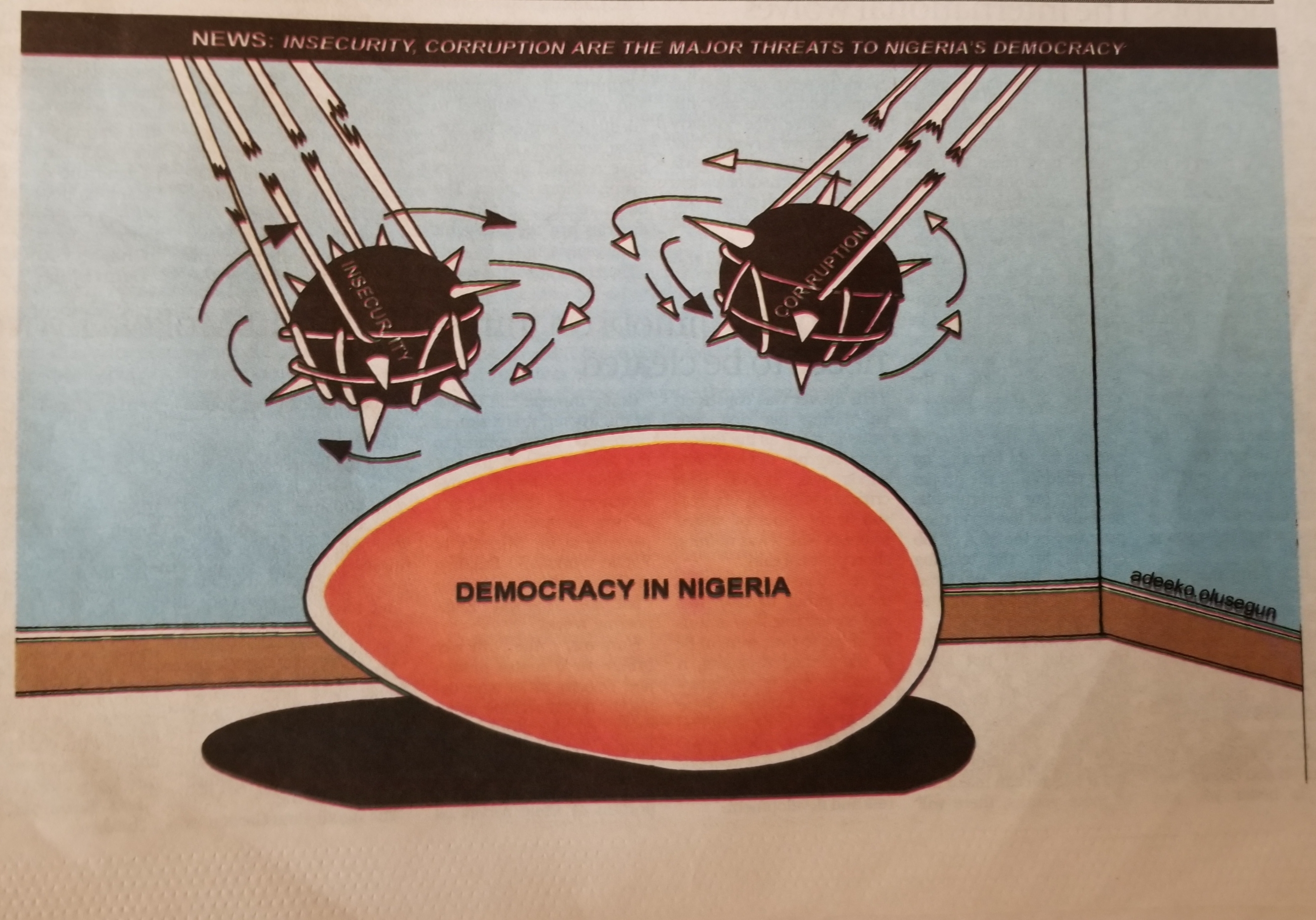
This cartoon by Adéẹk̀ọ́ Olùṣẹǵun of the Nigerian Tribune identifies some of the threats to democracy in Nigeria. Here, there are two thorny, guarded, and guided missiles targeted at an egg in a confined space. The egg represents of democracy in Nigeria.
Everything about Adéẹk̀ọ́’s depictions are symbolic. The choice of an egg signifies the fragility of Nigeria’s democracy. Its reddish color seems to suggest that democracy in the country has reached a boiling point, no thanks to the increased stories of corruption and insecurities that headline national news as the 2019 elections approach.
Adeeko Olusegun – I Will Rig Election…

In this cartoon, there is a woman and a boy talking. The woman finds a teachable moment in a statement made by Governor Abiola Ajimobi of Ọ̀yọ́ state. According to the governor, his political party, the All Progressives Congress (APC) “won’t rig [election] for anybody”.
The woman wants the child to practice his English language skills by asking him to convert “I will rig election” into future tense. The poor boy instead thinks the woman implies that she would rig election and he replies that she would go to jail.
In a way, this is a didactic cartoon. It seems to be teaching adults and young children about what should happen if someone takes part in fraudulent electoral activities.
Adeeko Olusegun – Masses after 8 Years
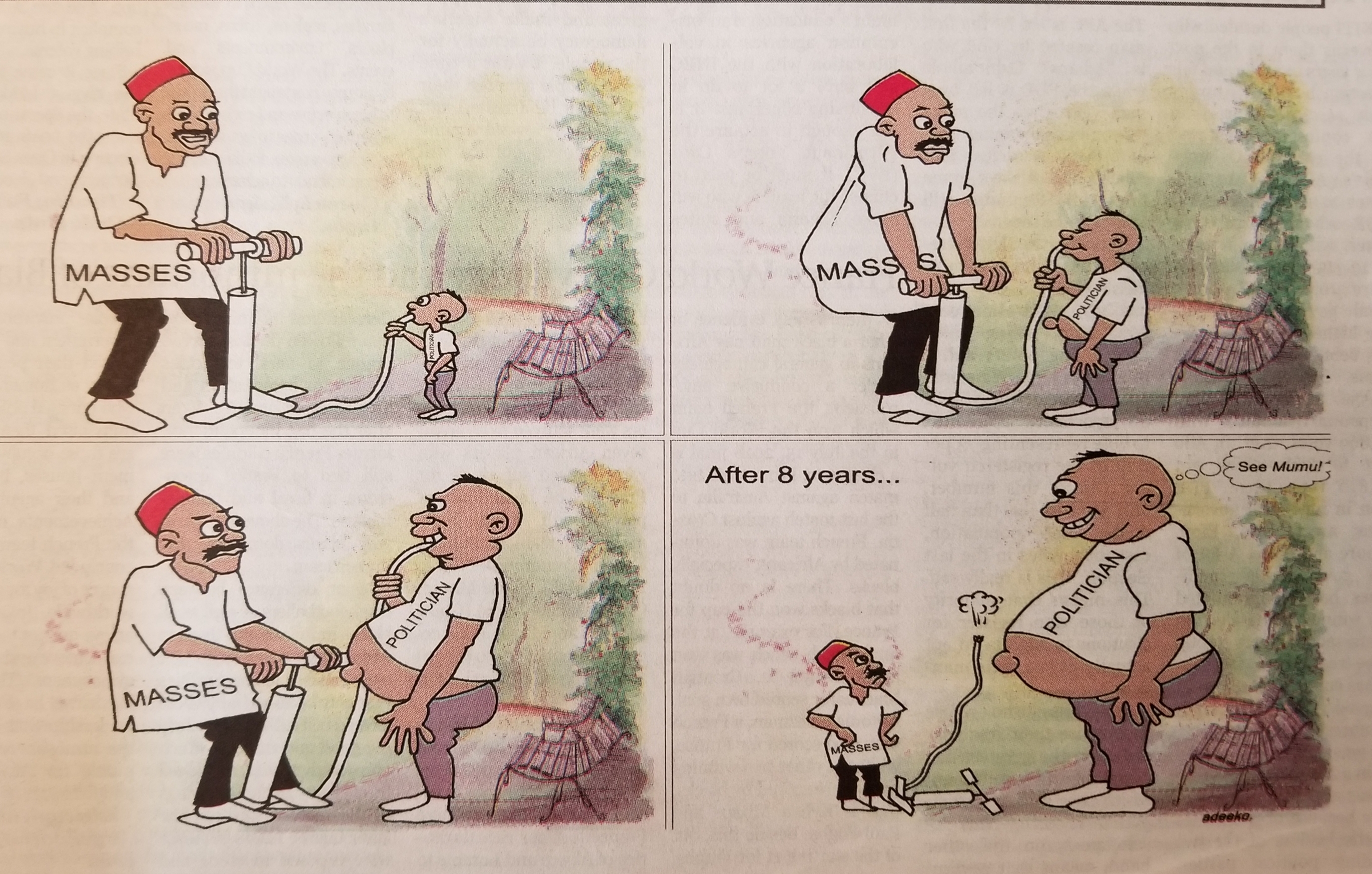
This cartoon, as one would expect, is funny. It is also tragic. Funny because it reveals how gullible Nigerian masses are. Tragic because it highlights the parasitic relationship between the masses and politicians in the country. Overall, the cartoon narrates an 8-year long story (“8 years” implies two terms in office.).
First, there is a red-capped man holding a bike pump that is inserted in the mouth of a tiny politician. This is the first encounter between both parties (the masses and politicians) and it reveals the dynamics of power relation between them. At the initial encounter, the masses seem to wield more power. This is probably the time when politicians canvass for votes. The choice of having a the man signifying the masses put on a red cap is also loaded with meanings. For one, it signifies respect. In some parts of Nigeria, only respected and highly important persons are traditionally permitted to use a red cap.
One can also see the progression of the politician from a tiny man to a big man.
The last picture in the cartoon is a reversal of the first. After 8 years, the politician has become huge – with a protruding belly (probably as a result of embezzling public wealth). The once respected man has also become a laughing stock, a mumu (Nigerian pidgin English word which means a dunce). Essentially, this cartoon reveals how deceptive Nigerian politicians are and how far they are willing to go to get what they want. Even the most respected individuals in the society become preys to their deceptions.
Adeeko Olusegun – N1.4 Trillion Voted for Federal Roads in 16 Years
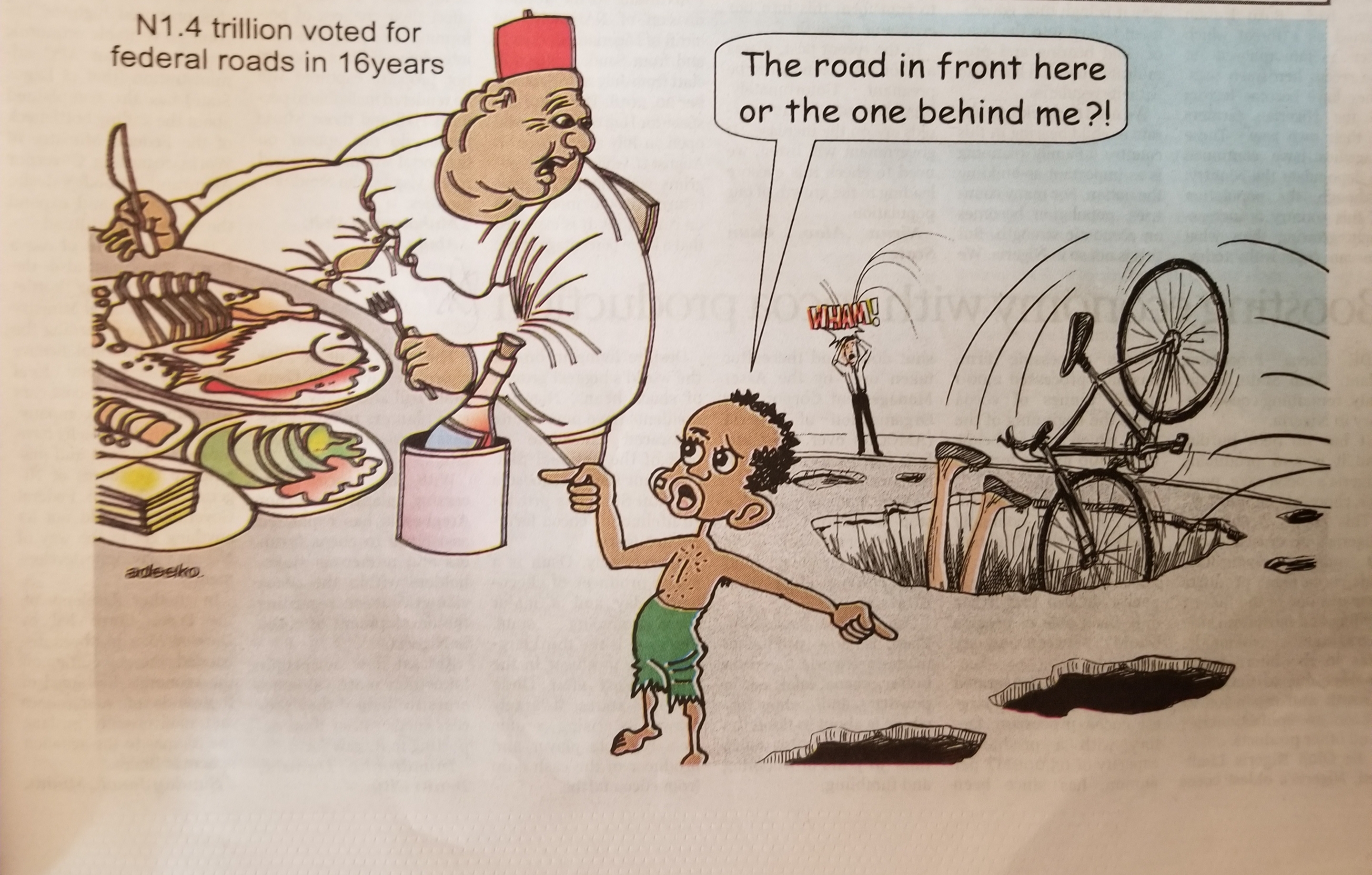
Nigeria returned to democratic rule in 1999. Since 2002, an estimated 1.4 trillion Naira have been budgeted for construction, repair, and maintenance of federal roads. Ironically, Nigerian roads are not safe. This piece is a commentary on the reality of unsafe, horrible roads and the apathy of Nigerian leaders (towards the horrible state of roads in the country).
In the cartoon, there is a feasting pot-bellied, obese, apathetic, red-capped man who seems to represents Nigerian leaders. There is also a shirtless barefooted man looking towards and questioning the seated leader while also pointing to two dark (signifying depth) potholes. Unfortunately, the shirtless man is not getting any attention.
In addition, there is a large deep hole that a biker already crashed into. Perhaps, this is used to show that Nigerian roads are not safe for bikers and motorists alike. There is also an image of a helpless bystander lamenting and shocked by the accidents on the roads.
The irony behind this cartoon is that as the 2019 elections draw nearer, many politicians have, again, started making promises that they would provide “good and motorable” roads for Nigerians.
